


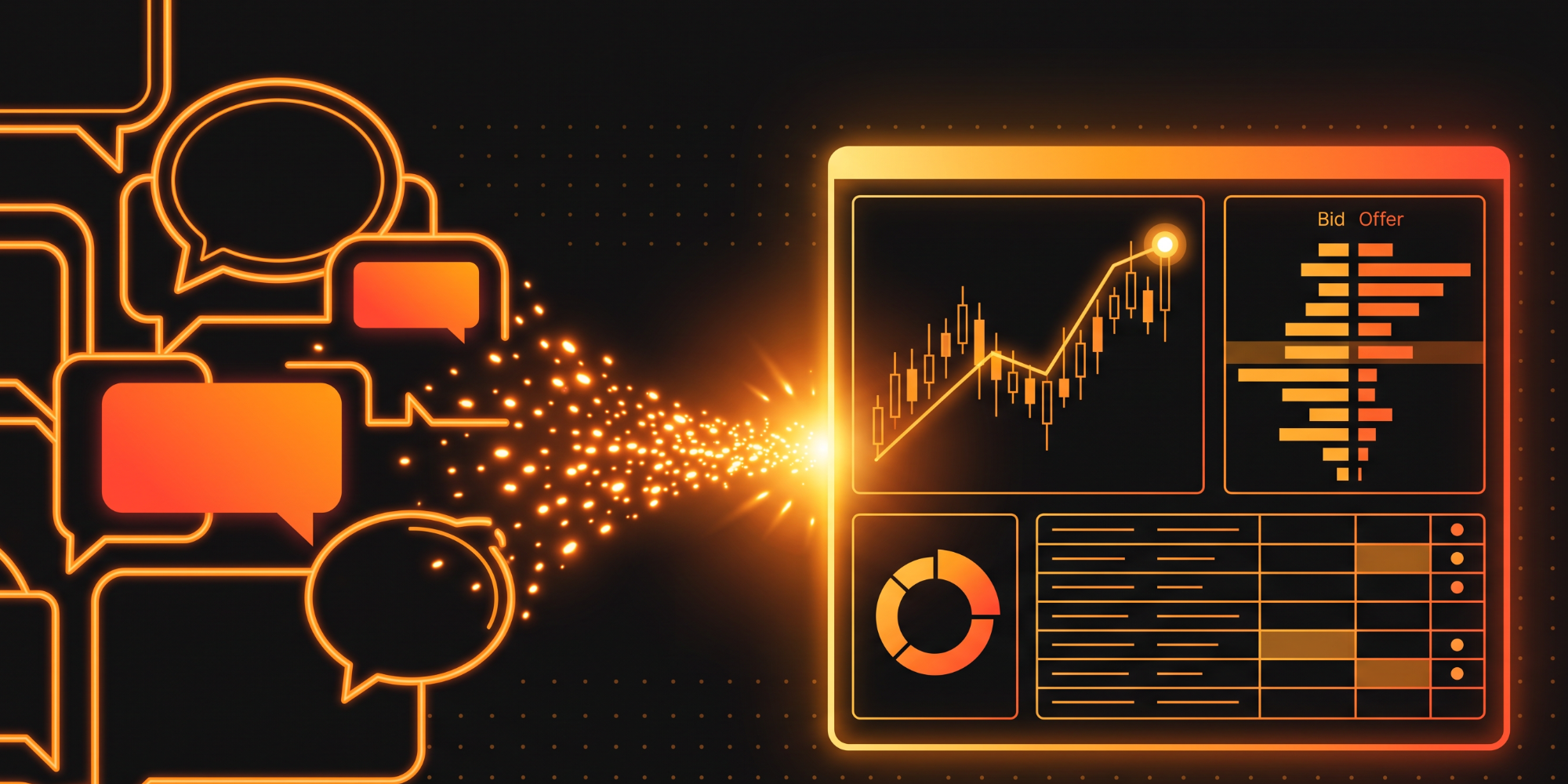
A buy-side trader about to go to market in an instrument wants to know what the street has been showing. Which dealers sent an axe this morning, and whether anyone has put out a run. Which RFQs are already out, and who has come back.
All of it is in chat, each piece in a different conversation with a different dealer. Colleagues on the desk hold conversations with the same dealers, and what they have been shown matters just as much. Seeing it together means scrolling back through every chat and asking colleagues what they have seen, then doing the same for the next instrument.
One message tells you little
On its own, an axe is one dealer's interest and an RFQ response is one level. Put them next to the trades in the same instrument and it shows who wants to do what, and where it gets done. That hasn't been practical because getting structured data out of chat has been too costly and complex.
Every data type on one screen, organised by your taxonomy
Quote Hub captures the axes, runs, RFQs, orders and trades coming in through chat, Excel, APIs and other platforms and structures them into one screen view. The view is organised by the desk’s taxonomy and can be filtered to what the desk follows, with the data types overlaid.
The analytics capability in Quote Hub works on that data. It tracks dealer win rates, spreads and response times, shows the best bid and offer, and keeps a history of market colour. Before sending an RFQ, a trader can run a what-if against that history and see how the dealers they are about to send to have performed. Sending to a narrower, better-informed set of dealers means fewer counterparties see the position being worked, and price discovery takes less effort when nobody has to assemble the picture by hand.
Where it goes next
RFQ analytics is already in use with customers, and analytics on axes is on the way. Next in line is the commentary: the broadcasts and unprompted colour in chat that explain why a market is moving, tagged against the same taxonomy so they sit alongside RFQs and axes. Traders will still be able to edit or update a tag, keeping a human in the loop and feeding corrections back into the models, and every message, tag and change is logged and audited under Control Hub permissioning.
