



At ipushpull, we understand the relentless pressure on financial institutions to not only deliver data faster but to ensure it's accurate, actionable and seamlessly integrated into critical workflows. Over the past year, we've focused on building and refining a set of powerful data transformation and workflow automation capabilities that take the heavy lifting out of handling client datasets that are often different to each other, complex and un-enriched.
In this blog, I’ll walk you through how we’re helping our customers turn chaotic inbound data from clients into a useful structure and what that means for your trading and business operations.
Supporting a Wide Range of Data Sources and Formats
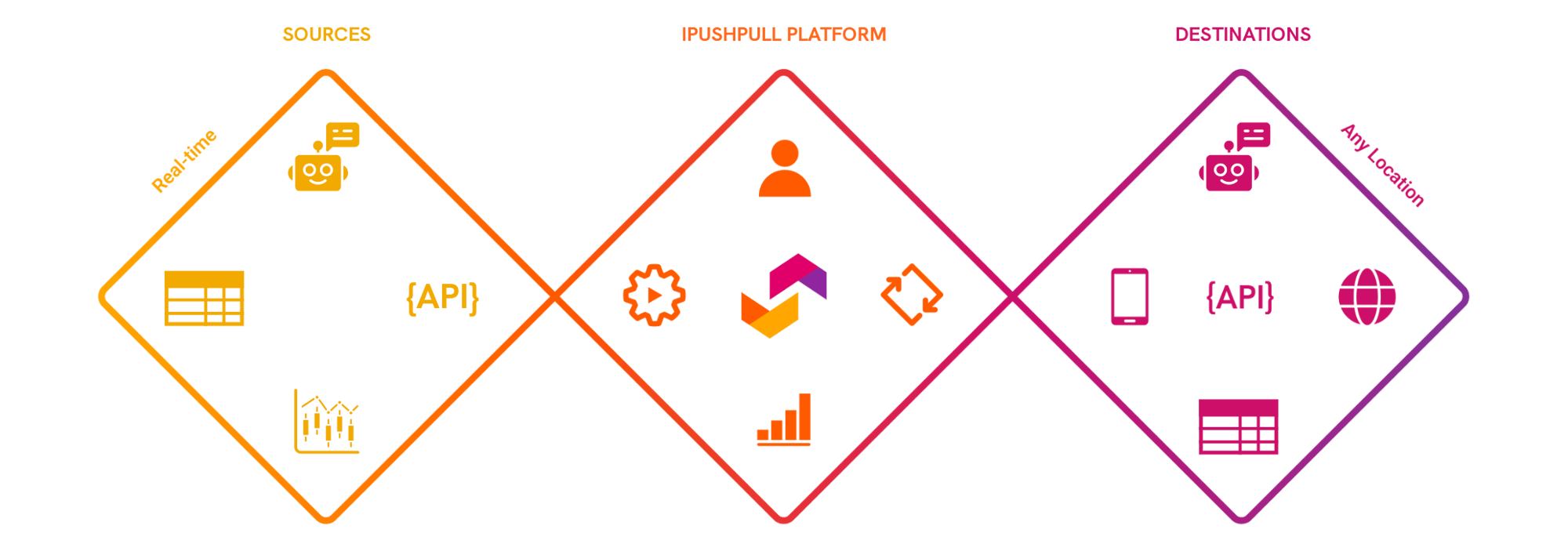
Often, every client that wants to send data prefers to use new different channels. So, before transformation even begins, the data must be captured reliably and flexibly from wherever it originates. That’s why we’ve built ipushpull to support a broad spectrum of data sources and file formats:
-
Structured files: CSV, Excel (XLS/XLSX), XML, JSON, TXT
-
APIs: RESTful and proprietary APIs, capable of connecting to most market data vendors and client systems
-
Messaging protocols: FIX, WebSocket and other streaming formats
-
Cloud storage and databases: Google Drive, OneDrive, S3 buckets
-
Chat-based inputs: Microsoft Teams, Slack, Symphony
This wide-ranging support allows clients to ingest both static and dynamic data, regardless of format or origin. We remove the need for manual file-wrangling and ensure that every input, no matter how complex, is ready for intelligent processing.
Data Transformation: From Fragmented Inputs to Standardised Structures
One of the biggest challenges facing our customers is data inconsistency. Whether it's trade blotters from external brokers, customer pricing requests or third-party data vendors, each data stream comes with its own format, schema, and quirks. Our platform is designed to ingest it all, make sense of it and standardise into one simple output.
We automatically convert these varied formats into standardised, schema-driven structures, creating a single source of truth that can be easily reused across internal systems. But this isn’t just a reformatting exercise. We layer in transformation logic that includes:
-
Validation: Catching errors or anomalies before they hit downstream systems.
-
Enrichment: Augmenting datasets with reference data, calculations, or derived metrics.
-
Normalisation: Ensuring consistency in naming conventions, data types, and structures.
The result? Clean, reliable data that’s ready for action.
Visualisation and Workflow Automation: Real-Time Insight Meets Intelligent Delivery
Standardising data is just the start. Once structured, our platform brings it to life through interactive dashboards, enabling teams to monitor and explore their data in real time. These aren’t static reports - they’re live, connected views that reflect up-to-the-minute changes across markets and internal systems.
From there, we plug this enriched data directly into your team's workflows:
-
Clear Dashboard of aggregated or transformed datasets to internal users, trading desks, or external counterparties, designed & configured bespoke for your business needs.
-
Seamless integration into systems like booking platforms and risk engines.
-
Historical comparisons and time-series analysis for better context and decision-making.
-
Data delivery to cloud warehouses such as Snowflake & AWS, for advanced analytics and reporting.
We’re not just showing data, we’re making it move.
Tangible Benefits for Front-Office Teams
Our mission is to take friction out of the data supply chain. By doing so, we deliver a cascade of benefits that enhance front-office performance:
-
Reduced manual effort: Say goodbye to spreadsheet wrangling and copy-paste routines.
-
Greater accuracy and consistency: Structured data reduces the risk of errors and misinterpretation.
-
Operational transparency: Everyone sees the same, reliable data and no more siloed views.
-
Improved efficiency: Faster access to actionable data leads to better, quicker decisions.
Final Thoughts
As trading environments become more data-driven, the winners will be those who can transform information into action, at speed and at scale. At ipushpull, we’re proud to be enabling that transformation.
If you're interested in how our platform could simplify and supercharge your data workflows, I’d love to have a conversation.
Frequently asked questions
What data formats and sources can ipushpull take in?
ipushpull takes structured files including CSV, Excel, XML, JSON and TXT. It connects to APIs for market data vendors and client systems as well as FIX and WebSocket streams. It also connects to cloud storage such as Google Drive, OneDrive and S3 and to chat platforms including Microsoft Teams, Slack and Symphony. That covers both static and streaming data.
How does ipushpull clean and standardise client data?
It converts each inbound format into a standardised, schema-driven structure that internal systems can reuse. Validation catches errors before they reach downstream systems, enrichment adds reference data, calculations or derived metrics and normalisation makes naming, data types and structures consistent.
Where can data be sent once ipushpull has standardised it?
It can go to live dashboards for internal users, trading desks or external counterparties, configured for each business. It can also feed booking platforms and risk engines, support time-series analysis and be delivered to cloud warehouses such as Snowflake and AWS.
How does automating inbound data handling help front-office teams?
Teams spend less time wrangling spreadsheets and copying and pasting. Structured data reduces the risk of errors and misinterpretation, and everyone works from the same data. Faster access to usable data supports quicker decisions.
Learn more about Data as a Service from ipushpull.